
Furnace Not Blowing Hot Air? 6 Quick Checks Before You Panic
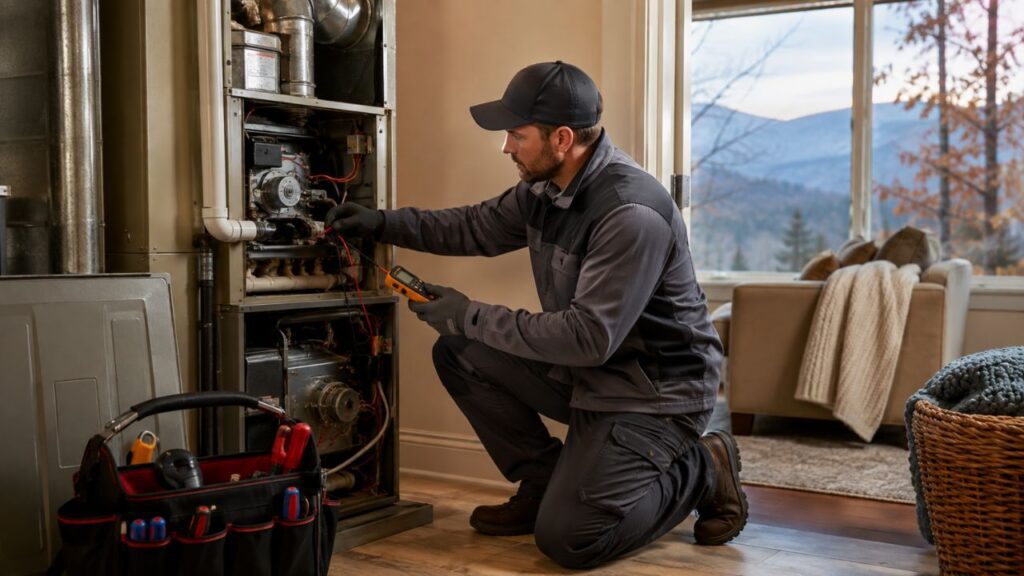
A furnace not blowing hot air does not always mean the unit has failed. The cause may be a wrong setting, a dirty filter, a shut vent, or lost power. Start with six safe checks. If the heat still stays off, call a trained HVAC tech.
That is the calm way to handle a cold North Georgia night. One room can feel chilly at first. A few hours later, the whole house can feel like a garage. Check the easy things first, but do not turn a small fault into a risky DIY job.
Why Is Your Furnace Not Blowing Hot Air?
A furnace has to do several jobs in order. The thermostat asks for heat. The unit gets power and fuel. Then it makes heat, and the blower sends warm air through the ducts.
One missed step can stop the whole chain. You may get cool air from the vents. You may also have a furnace not blowing air at all. These checks help sort a simple miss from a fault that needs a pro.
1. Check the Thermostat
The thermostat gives the heat call. Set it to Heat, and raise the set temp a few degrees above room temp. If the screen is blank, change the batteries if needed.
Now look at the fan mode. If it says On, the fan may blow with no heat. That can send cool air through the vents. Set the fan to Auto instead. Technicians lists both as first checks for cool furnace air.
Quick Check for a Furnace Not Blowing Hot Air
Use this list:
- Set the mode to Heat.
- Set the temp above room temp.
- Set the fan to Auto.
- Replace weak batteries, if used.
Give the system a few minutes after the change. Does warm air start to flow? If yes, the fix may have been that simple. If not, move to the filter.
2. Check the Furnace Filter
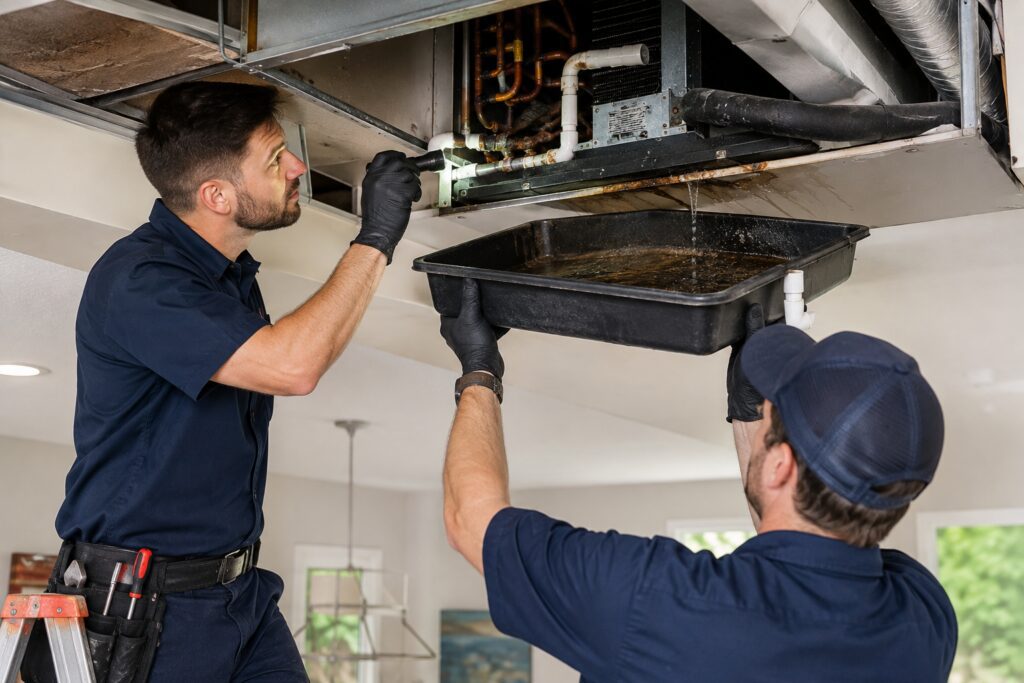
A dirty filter can slow air flow. That can make the furnace run too hot. A safety switch may stop the heat. The fan may still blow. So cool air may reach the vent.
Turn the furnace off before you pull the filter. If a throw-away filter is packed with dust, replace it. Use the right size and type. Never run the furnace with no filter in place.
Think about the last few weeks. Was there drywall dust or lots of pet hair? Filters can load up fast. A clogged filter can cut airflow and make the unit shut off from excess heat.
3. Open Vents and Clear Return Grilles
Walk through each room. Make sure the heat vents are open. Move rugs, toys, baskets, or chairs that block them. A closed floor vent is easy to miss when the house is cold.
Check the large return grilles too. Air needs a clear path back to the furnace. If one room stays cold but the rest feels fine, the cause may be a vent or duct issue. Blocked vents can keep heat from moving through the home.
Look for these clues:
- A sofa over a floor register
- A rug over a heat vent
- A shut vent in a spare room
- Dust packed on a return grille
- One room far colder than the rest
4. Check the Furnace Switch and Breaker
A gas furnace still needs power. Look for the service switch near the unit. It can look much like a wall light switch. Make sure no one turned it off by mistake.
Next, check the breaker box. Find the breaker marked for the furnace or HVAC system. If it has tripped and you know it serves the furnace, reset it once. If it trips again, stop and call a pro.
This is a key choice. Should you keep flipping the breaker just to get ten more minutes of heat? No, a repeat power fault can point to a larger furnace problem that needs service.
5. Check the Fuel Supply, but Do Not Take Parts Apart
A furnace cannot make heat with no fuel. Does the home use propane or oil? Check the tank level. A missed fuel fill can look like a bad furnace. Rule that out before a repair visit.
With natural gas, keep the check simple. Do not open gas parts. Do not try to fix a valve. If there is a strong gas smell, leave at once. Call 911 from a safe place. Do the same if a carbon monoxide alarm sounds.
Older units may use a pilot light. Newer units often use an electric igniter. If the unit will not light, keeps losing flame, or shows a yellow or rough flame where one is visible, stop there. Those signs call for trained HVAC help.
6. Listen to What the Furnace Does
Turn the heat on and listen. Does the thermostat click? Does the blower start? Does the burner light, then shut off fast? Does the unit run with no air from the vents?
Those clues matter. A furnace not blowing air can point to the blower or power. It may also be a control or safety fault. If air moves but stays cold, fuel or ignition may be at fault. A sensor can fail too. Do not guess at those parts.
Call for help if you notice:
- Loud bangs, grinding, or hissing
- A strong gas smell
- A carbon monoxide alarm
- A breaker that trips again
- Heat that starts, then stops
- No air after the basic checks
- A yellow or rough burner flame, if visible
Get professional help for gas smells, unusual furnace sounds, or problems that remain after basic troubleshooting.
When a Furnace Not Blowing Hot Air Needs a Pro
If the six checks do not bring heat back, it is time for a proper test. Professional HVAC services in North Georgia from Star Services may be the next step. Our team has been serving North Georgia for more than 24 years. Our techs are licensed and insured.
Our heating repair and service lists furnace repair, thermostat work, duct checks, and urgent heat service. At Star Services, our heating team works with gas furnaces, heat pumps, boilers, and other heating systems. That helps move the visit from guesswork to a proper system check.
That local reach can help when winter heat fails in Alpharetta, Cumming, Gainesville, Duluth, Johns Creek, Dawsonville, or Buford. When the home is getting colder, having a local team to call can make the next choice much simpler.
When to Call for Professional Furnace Repair
A furnace problem does not always mean a costly repair, but it should not become a guessing game either. Check the thermostat, filter, vents, power, and fuel first. If the heat still does not return, let a trained HVAC technician find the real cause before a small fault grows into a bigger one.
For North Georgia homeowners, Star Services offers professional heating repair and emergency HVAC help when the cold cannot wait. When winter settles in, the goal is simple: get the heat back safely, quickly, and without taking chances with the system that keeps the whole home warm.