
AC Fan Not Working? 7 Hidden Problems That Affect Cooling
An AC fan not working usually means the unit has lost power, the motor cannot start, or a safety control has shut it down. In a commercial building, that small fault can spread fast. One warm room can soon become a hot office, shop, kitchen, or work floor.
First, find out which fan has stopped. The indoor blower sends cool air through the ducts. The outdoor fan moves heat away from the condenser. When either one fails, cooling drops and the rest of the system may strain.
Why an AC Fan Not Working Needs Fast Attention
A still fan is more than a comfort issue. The unit may keep trying to run and build up heat. The indoor coil may also freeze when airflow falls. A small fault can then lead to lost work time and a larger repair.
Picture a café in Cumming on a damp July day. The thermostat reads 74°F, but the dining room keeps getting warmer. The outdoor unit hums, yet no air comes from the vents. That clue points to the indoor blower side.
Before opening any panel, keep the checks simple:
- Make sure the thermostat is set to Cool.
- Set the fan to Auto, not Off.
- Check whether one HVAC breaker has tripped.
- Look for a dirty filter or blocked return grille.
- Turn the unit off if it hums, smells hot, leaks, or has ice.
Do not keep resetting a breaker. A second trip often means there is an electrical fault. Capacitors and wires can still be dangerous when the fan is still. Leave panel work and meter tests to a trained HVAC technician.
7 Hidden Reasons Your AC Fan Is Not Working
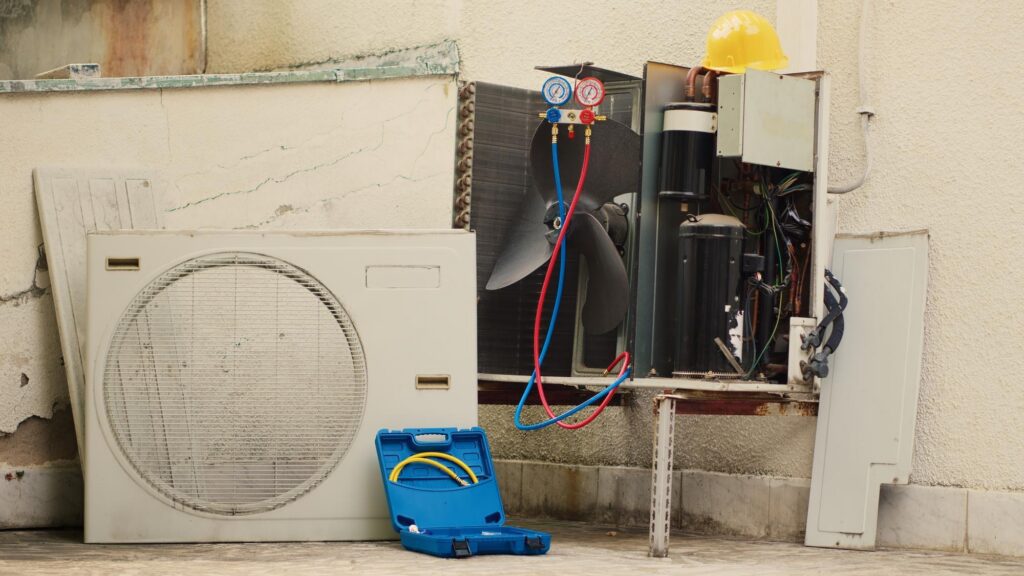
An AC fan can stop even when the rest of the system seems normal. These seven common faults can weaken airflow, halt cooling, and put added strain on a commercial AC unit.
1. The Thermostat or Building Control Sends No Start Signal
Why is the fan on my AC not working? Sometimes the fan is fine, but it never gets the call to start. An incorrect setting, a failed sensor, a loose low-voltage wire, or a control fault can stop that call. Commercial sites may also have zone panels, timers, or a building control system, so one area can fail while the rest feels normal.
2. A Breaker, Fuse, Disconnect, or Wire Cuts Power
The indoor and outdoor parts may use different power feeds. That is why one section can run while the other stays silent. A tripped breaker, open disconnect, blown fuse, weak contactor, or loose wire can stop the fan. Reset a marked breaker once, then call for service if it trips again.
3. A Dirty Filter Chokes the Airflow
A packed filter makes the blower pull against a wall of dust. Airflow falls, rooms cool at different rates, and the motor runs hot. This is common in shops, salons, offices, and food sites where lint, hair, dust, or grease builds fast. Fit the right filter and keep all return grilles clear.
4. Ice Turns an Airflow Fault Into a Cooling Failure
A frozen indoor coil can be caused by poor airflow, a dirty coil, or a refrigerant fault. The fan may run slowly, stop, or push almost no air. Water may show up when the ice melts. Turn cooling off, do not chip the ice, and have a technician find the real cause.
5. The Fan Capacitor Has Failed
A capacitor helps the fan motor start and stay in motion. When it fails, the unit may click, hum, start slowly, or stop after a short run. This is a common cause of an AC fan not working during peak heat. A capacitor can hold a strong charge, so replacement is not a safe DIY task.
6. The Blower or Condenser Fan Motor Is Worn
Fan motors wear from heat, dirt, bad bearings, and long run times. Early signs include weak airflow, a hot smell, a harsh buzz, or a fan that starts and stops. A technician should test power, current, bearings, controls, and the fan wheel. Replacing only the motor will not help for long if a bad capacitor or blocked coil causes the heat.
7. A Belt, Blade, or Fan Wheel Has Slipped
Many commercial rooftop units use a belt-driven supply fan. A loose, worn, or broken belt can leave the motor running while the blower moves little air. Bent blades, a dirty wheel, or loose parts can also cut airflow and cause noise. A commercial HVAC technician can check belt tension, alignment, wheel balance, and guards.
Can the AC Stay On Until Help Arrives?
Usually, no. Shut it down when the fan is still but the unit hums. Also stop the system if you notice ice, smoke, a burnt smell, water near live parts, or hard metal noise. Running it may damage more parts and raise the repair cost.
Use this quick decision guide:
- Check first: Thermostat mode, set point, fan mode, filter, and clear vents.
- Stop at once: Smoke, sparks, hot smells, ice, leaks, or loud grinding.
- Book service: The breaker trips twice, the fan only hums, or airflow stays weak.
- Plan ahead: Ask about repair cost, part supply, downtime, and the unit’s past faults.
For a business, the key question is not, “Can it limp through today?” The better question is, “What could another hour of run time damage?” An AC fan not working in a busy site can affect staff, guests, stock, and daily trade.
Commercial AC Fan Repair From Star Services
When an AC fan not working starts to heat a North Georgia workplace, a fast check can limit the harm. Star Services Heating & Air Conditioning offers 24/7 HVAC support across North Georgia. Our licensed team has more than 24 years in business and works on major AC brands.
The team can trace faults from the thermostat to the fan motor and compressor. Common parts are kept on service trucks, which may help many jobs move ahead on the first visit. Pricing is shared before work starts, and the company states that repairs include satisfaction and warranty protection.
Property managers, shop owners, office teams, and facility leads can review Star Services’ AC repair and installation service and schedule a visit. When the building is getting warmer by the hour, is it worth asking the fan to struggle through one more cycle?