
Cracked Heat Exchanger Symptoms: 7 Serious Warning Signs
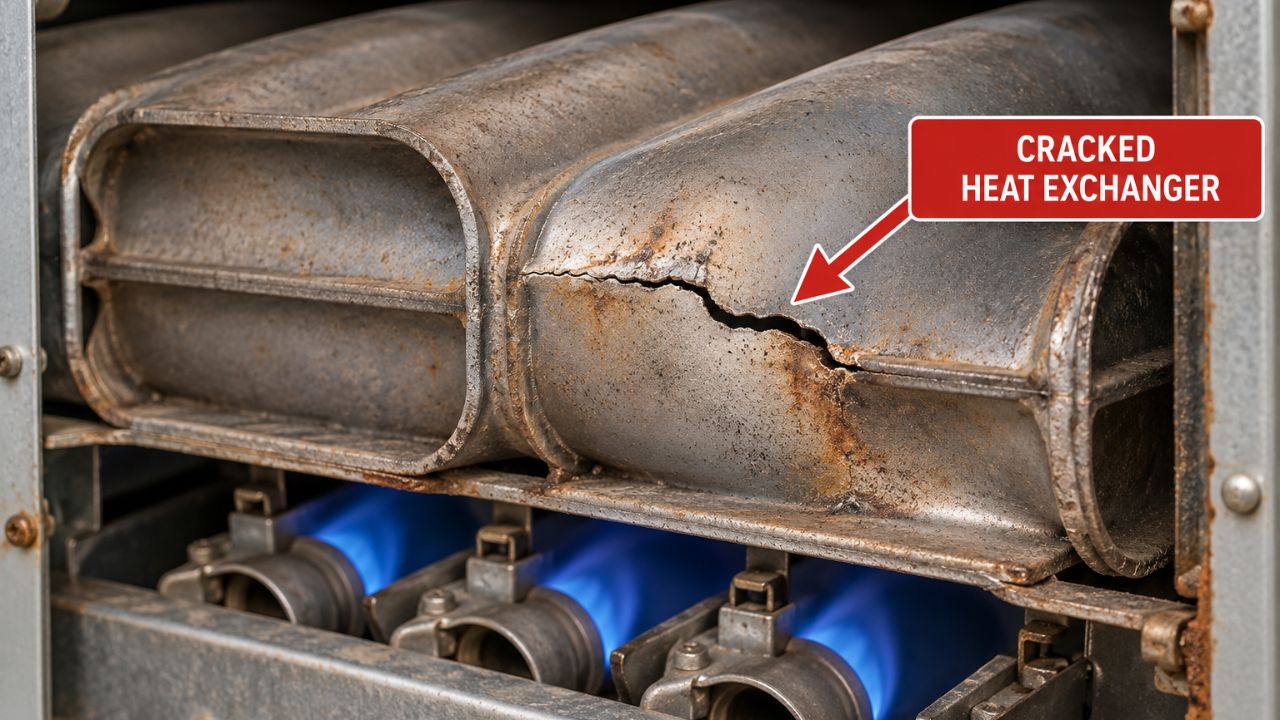
Cracked heat exchanger symptoms can include odd furnace noises, yellow flames, black soot, and a carbon monoxide alarm going off. The problem is that these signs can also mean something else is wrong with your furnace. You can’t know for sure without an inspection.
Maybe your furnace has started making a loud noise when the heat comes on. Or it runs for a few minutes, shuts off, and starts again. Is it a small problem or something serious? At Star Services Heating & Air Conditioning, we help North Georgia homeowners with furnace problems. Here’s what you need to know before using your furnace again.
What Is a Cracked Heat Exchanger?
Your furnace has a metal part called the heat exchanger. It helps warm the air that goes through your vents. At the same time, it keeps the gases from the burning fuel away from the air inside your home.
That metal gets hot every time the furnace runs. Then it cools down when the heat goes off. After years of doing this, the metal can start to wear out. Rust and too much heat can make it worse. If a crack forms, harmful gases may get into the air you breathe. That’s why a cracked heat exchanger is a safety concern, even if your furnace still works.
7 Cracked Heat Exchanger Symptoms You Should Know
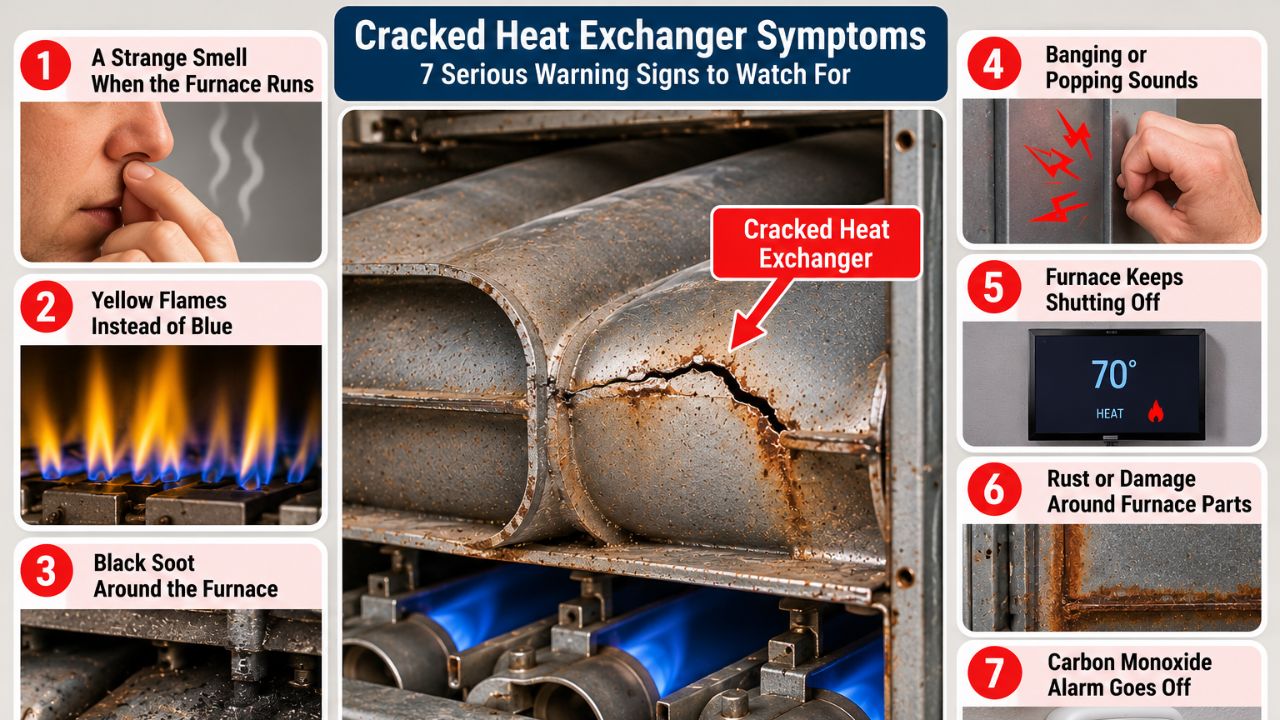
Some furnace problems are easy to spot. Others aren’t. These seven signs can help you tell when it’s time to have your heating system checked.
1. A Strange Smell When the Furnace Runs
You turn on the heat after a long summer and notice a dusty smell. It goes away after a short time. That’s pretty common when a furnace hasn’t been used for months. But the smell that keeps coming back is different. Maybe it smells like something is burning, even though nothing looks wrong.
It could be an overheating part or another furnace problem. A smell alone won’t tell you whether the heat exchanger is cracked. If it’s strong or doesn’t go away, turn the furnace off and get it checked. If you smell rotten eggs, leave the house and call your gas company or emergency services from outside. That could mean a gas leak.
2. Yellow Flames Instead of Blue
Gas furnace flames are usually mostly blue. If you can see the flame through the viewing window and it looks yellow or moves strangely, something may be wrong. It could be dirty burners or a problem with how the gas burns. A damaged heat exchanger can sometimes affect the flame too.
You don’t need to open the furnace to check. In fact, you shouldn’t. If you notice an unusual flame, turn the system off and call an HVAC technician.
3. Black Soot Around the Furnace
Black powder or dark stains near the burners aren’t something you want to see. That’s soot, and it can build up when the gas doesn’t burn properly.
You may notice it around the burner area or near the vent pipe. Sometimes, the marks are small enough that you wouldn’t think much of them. But soot can point to a problem with the burners or venting. It doesn’t always mean the heat exchanger is cracked. Either way, stop using the furnace until someone checks it.
4. Banging or Popping Sounds
Furnaces aren’t completely quiet. A little clicking when the heat starts is normal. You may also hear the metal make a soft popping sound as it warms up. A loud bang is another matter. Maybe you’ve heard it a few times and thought it was just the ductwork. It could be. But a bang when the burners light can also mean the gas isn’t lighting as it should. If the sound is new or unusually loud, turn the furnace off and have it checked.
5. The Furnace Keeps Shutting Off
You set the thermostat to 70°F. The furnace starts, runs for a few minutes, and stops. The room is still cold. Then it starts all over again. This is called short cycling. A dirty filter or blocked vent could be the reason. Sometimes, the furnace gets too hot and shuts itself down to prevent damage.
That extra heat can put stress on the heat exchanger. So even if the part isn’t cracked now, the problem shouldn’t be left alone. Don’t keep resetting the furnace and hoping it works. Find out why it’s shutting down.
6. Rust or Damage Around Furnace Parts
A little rust on the outside of an older furnace doesn’t prove there’s a crack inside. Still, it’s worth paying attention to. Look for rust near the vent pipe, water stains, or metal that seems badly worn. Moisture can slowly damage furnace parts, including the heat exchanger. You probably won’t be able to see the heat exchanger itself. It’s tucked away inside the furnace. A technician can open the unit and check the metal for cracks or other damage.
7. Your Carbon Monoxide Alarm Goes Off
This is the one warning you should never wait on. A damaged heat exchanger can allow carbon monoxide to escape from the furnace’s gas path. You can’t smell or see carbon monoxide. That’s what makes it so dangerous.
People exposed to it may have:
- Headaches or dizziness
- Nausea or weakness
- Trouble thinking clearly
- Unusual tiredness
- Several people feeling sick at once
If your carbon monoxide alarm goes off, get everyone outside right away. Call 911 from outside and don’t return until emergency responders say it’s safe. Anyone who may have been exposed needs urgent medical care. The alarm doesn’t necessarily mean the heat exchanger is cracked. Another gas appliance could be the source.
Is It Safe to Run a Furnace With a Cracked Heat Exchanger?
No. If the heat exchanger is cracked, don’t use the furnace until it’s repaired or replaced. You might wonder if it’s okay to run the heat for just one night, especially when it’s freezing outside. It isn’t worth the risk.
Even a furnace that seems to heat normally can have a serious problem inside. And a carbon monoxide alarm that hasn’t sounded doesn’t mean the heat exchanger is fine. If you think something is wrong, leave the furnace off and have it inspected.
How Does a Technician Check for a Cracked Heat Exchanger?
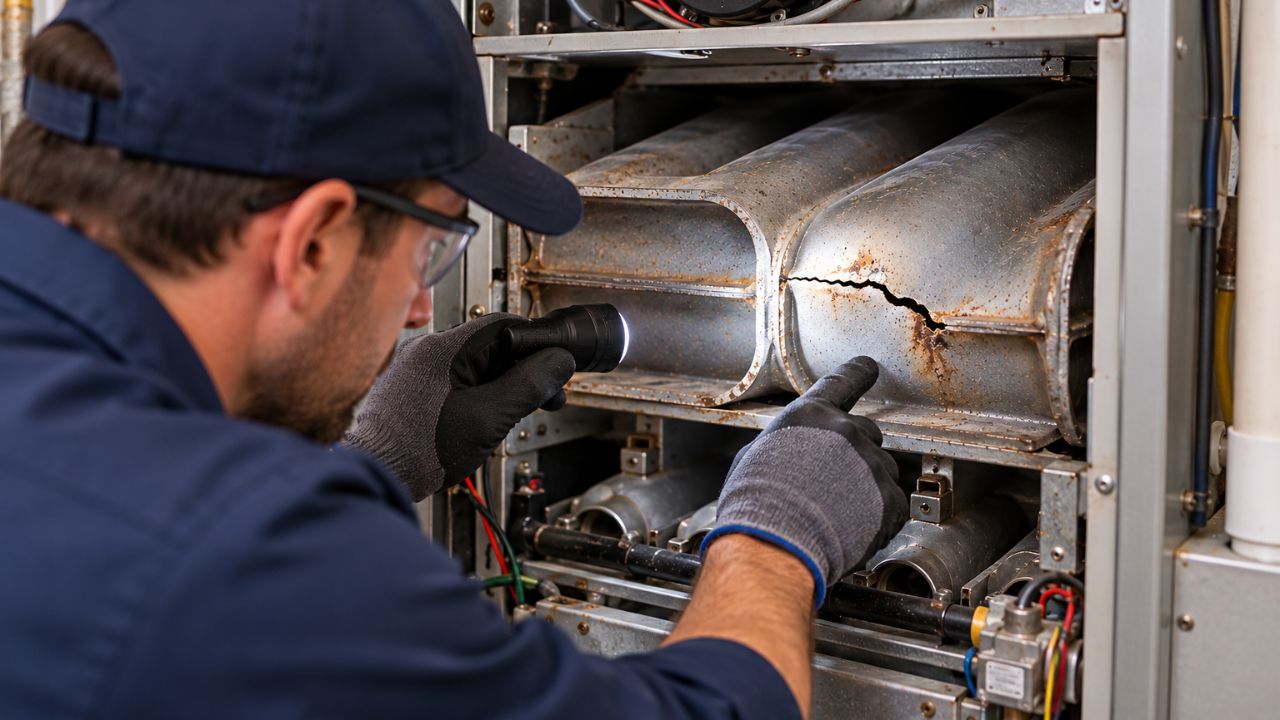
You can’t confirm a crack from a strange noise or yellow flame alone. A technician needs to look inside the furnace and check how it’s working.
During an inspection, they may:
- Look for cracks using a light, mirror, or small camera.
- Check the burners and how the flames behave.
- Test combustion gases and furnace operation.
- Look for blocked airflow or signs of overheating.
If someone tells you the heat exchanger is cracked, it’s okay to ask questions. Where is the damage? Can they show you a photo? Does the whole furnace need replacing? A good diagnosis should come with a clear explanation. If you’re unsure, you can ask another qualified technician to check it. Just leave the furnace off in the meantime.
Should You Repair or Replace the Heat Exchanger?
A cracked heat exchanger isn’t something you can safely patch up. The damaged part needs to be replaced, or you may need a new furnace. But that doesn’t mean every cracked heat exchanger calls for a whole new heating system.
Say your furnace is only eight years old. The heat exchanger might still be under warranty. In that case, replacing the part could be worth considering. Now, if your furnace is 18 years old and has needed several repairs, putting more money into it may not make sense.
Before deciding, check:
- Warranty: Is the heat exchanger still covered?
- Age: How old is your furnace?
- Repair cost: What will parts and labor cost?
- Condition: Are other parts starting to fail?
Ask for both repair and replacement estimates when possible. That way, you can compare the costs instead of guessing.
What Causes a Heat Exchanger to Crack?
Most cracks develop over time. The metal heats up and cools down thousands of times during the furnace’s life. That puts stress on it. Too much heat can make things worse. A clogged air filter or blocked vent can keep warm air from moving through the system as it should.
Rust can also weaken the metal. Sometimes, the furnace is simply getting old. Changing your air filter and keeping up with furnace maintenance can help prevent some problems. It also gives a technician a chance to spot wear before it gets worse.
When Should You Call for Furnace Repair in North Georgia?
You don’t have to wait until the furnace quits working. If it keeps shutting off, makes a new banging sound, or has soot around the burners, have it checked.
North Georgia weather can be a little unpredictable. You might have a warm afternoon, then need the heat all night. A furnace problem is much easier to deal with before the next cold spell. At Star Services Heating & Air Conditioning, we provide professional heating repair services for North Georgia homeowners. Our team can inspect your furnace, explain what’s wrong, and help you decide what to do next.
If you’ve noticed signs of a cracked heat exchanger, schedule an inspection before using the furnace again. You shouldn’t have to wonder whether it’s safe to turn on the heat in your own home.