
AC Drain Pan Repair: Is It a Leak, a Clog, or a Damaged Pan?
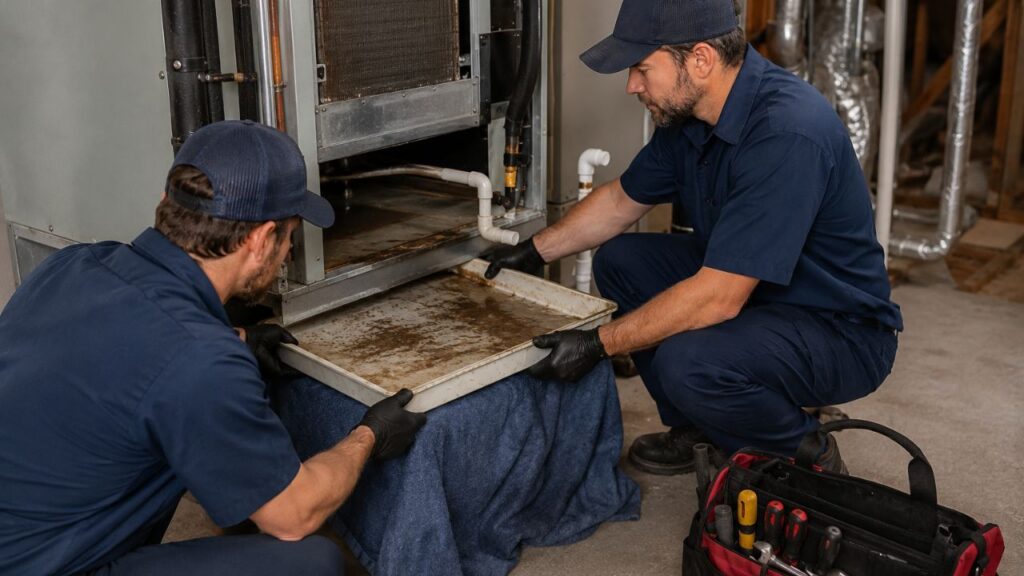
AC drain pan repair starts by finding one thing first: is the water coming from a clogged drain, a bad pan, or another AC fault? A clog may need a drain cleaning, while a cracked pan may need a new part. If the coil is frozen, the pan may only be where the water lands. It may not be the true cause.
In North Georgia, a small drip can turn into a big mess. Summer air is often hot and damp, so the AC removes a lot of moisture. If that water has no clear path out, it can soak drywall, floors, or insulation.
AC Drain Pan Repair Starts With the Source
The drain pan sits under the indoor coil. Water forms as the AC cools and dries the air. It falls into the pan, then flows into the drain line. From there, it should leave the building.
Many technicians point to clogged drain lines and damaged drain pans as common causes of indoor AC water leaks. A pan can crack or rust with age. So a puddle near the air handler does not prove the pan is bad. The source still needs to be checked.
Before choosing AC drain pan repair, look for these signs:
- Water sits in the pan: The drain line may be clogged.
- Water drips through one spot: The pan may have a crack or rust hole.
- The AC shuts off: A float switch may have sensed high water.
- Ice is on the coil: The leak may start with a frozen coil.
These clues help, but they are not a full test. Water can run along pipe, metal, or insulation before it drops. A leak seen in one spot may start somewhere else.
Is It a Clog Instead of a Bad Pan?
A clogged condensate line can make the pan overflow. Dirt, dust, slime, and debris can slow the drain. Water then backs up. Once the pan fills, it spills over the edge.
This is why the cause should come before the fix. If the pan is sound, replacing it will not clear a blocked line. The water will come back. Good AC drain pan repair starts with a flow check.
A service visit may include:
- Turn off power before work starts near the indoor unit.
- Remove standing water and inspect the pan.
- Clear the drain line with the right service tools.
- Test the drain to make sure water flows out.
It is always good to opt for professional help for clogs that keep coming back. That is wise when a unit sits in an attic or above a finished room.
When AC Drain Pan Replacement Makes More Sense
Some pans only need cleaning. A pan with deep rust, a split, or a hole is different. If water can leak through the pan itself, AC drain pan replacement may be the safer long-term fix. A patch may only buy time.
The unit design matters too. Some pans are easy to reach, while others sit deep in the air handler. A tech may need to check the coil, drain joint, pan slope, and nearby parts before giving a repair plan.
AC drain pan replacement is worth a closer look when you see:
- A clear crack, split, or hole
- Heavy rust or deep pitting
- A warped pan that will not drain
- An old patch that has started to leak again
Think about what sits below the unit. Is it an open slab, or a finished ceiling? Is it a stock room, office, or hall used by customers? One more leak can cost far more than doing the job right.
Could the Pan Be Fine but the AC Still Leak?

Yes. The pan catches water, but it does not cause every leak near the indoor unit. A frozen coil can thaw and send extra water into the drain system. A drain fitting can also leak even when the pan is sound.
A dirty filter is one possible cause of coil icing. It also notes that low refrigerant can play a role. Refrigerant work is not a DIY task. It needs a trained HVAC pro.
Here is the key decision point: does the water return after the drain is cleared? If yes, do not keep treating the same symptom. The next check should look at the coil, filter, drain fit, pan, and unit pitch.
What Should You Do When You Find Water?
Turn the cooling system off if water is spreading near wires, ceilings, or finished areas. Do not keep it running just to see what happens. More run time can mean more water.
Next, check only what you can see safely. Note if the pan is full, where the drip starts, and whether ice is present. Take a few photos before the area dries. Those details can help a tech trace the fault.
For a business, time matters even more. Water above a sales floor, office, server area, or tenant space can stop work fast. For commercial cooling needs, review Star Services’ AC repair and installation services. Our team offers repair, installation, maintenance, and emergency support.
Why Book Professional HVAC Service in North Georgia?
A water leak can look simple from the floor. Up close, the cause may be a clog, bad pan, loose joint, frozen coil, or more than one fault. A trained tech can check the whole drain path and the AC parts around it. That makes AC drain pan repair less of a guessing game.
At Star Services Heating & Air Conditioning, our team serves North Georgia areas such as Alpharetta, Cumming, Gainesville, Duluth, Johns Creek, Dawsonville, and Buford. All our HVAC technicians are licensed and insured. They provide HVAC services for homes and businesses across the area.
If water is spreading, the system has shut down, or the leak cannot wait, we also provide 24/7 emergency HVAC service. It is available on weekends and holidays too. That can matter when a leak shows up after hours instead of at a neat time on a weekday.
Fix the Cause, Not Just the Wet Spot
The best AC drain pan repair is based on the real cause. A clog needs a clear drain. A failed pan needs a sound pan. A frozen coil needs the fault behind the ice found and fixed.
Keep these points in mind:
- Standing water often points to a drain problem.
- A cracked or rusted pan may need replacement.
- A shut-down unit may have a tripped float switch.
- Ice near the coil can point to another AC fault.
- A leak that comes back needs a full system check.
A wet pan is a clue, not a full diagnosis. The better question is not, “How fast can this be patched?” It is, “What made the water end up here, and what will stop it from coming back?”