
Furnace Not Turning On? 5 Major Problems Behind the Failure
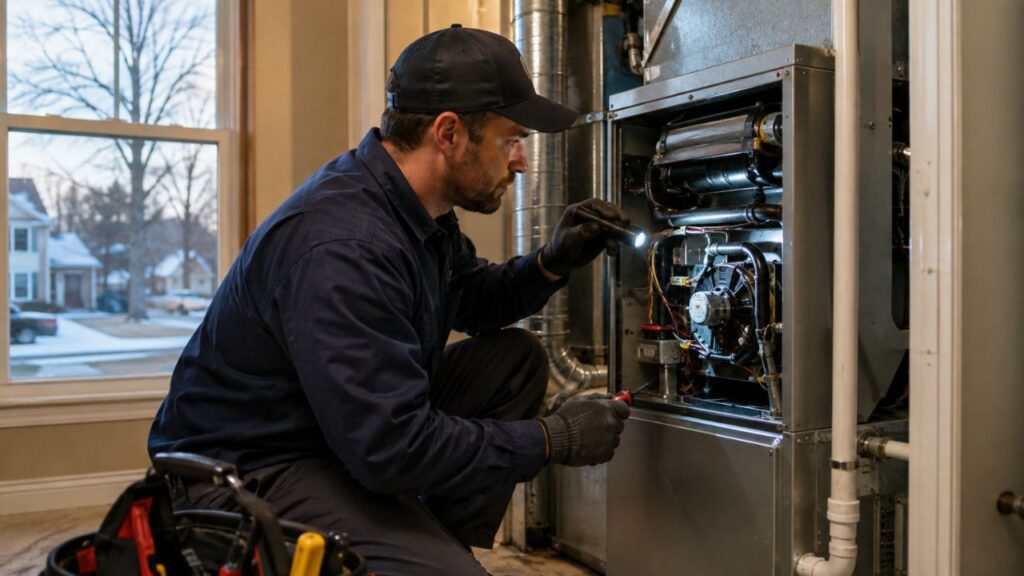
A furnace not turning on in winter often points to one of five things: a thermostat fault, lost power, poor airflow, an ignition or gas fault, or a failed safety part. Some checks are safe at home. Others need a trained HVAC tech. The goal is to rule out easy causes before a small fault grows.
That matters in North Georgia. A mild day can turn into a cold night fast, and a quiet furnace may fail when asked to work hard. So, start with the basics. If those checks do not bring the heat back, call a pro.
Furnace Not Turning On? Check These Basics First
A furnace needs a call from the thermostat, electric power, and free airflow before it can heat. If one is missing, the unit may stay off or shut down.
Before opening any panel, check these items:
- Set the thermostat to heat and raise the set temp a few degrees.
- Replace thermostat batteries if the screen is blank or weak.
- Make sure the furnace power switch is on.
- Check the furnace breaker once.
- Replace a filter that is packed with dust.
If the heat comes back, watch it. If it starts, stops, and fails again, do not keep hitting reset. A repeat fault is a clue. The furnace may be shutting down to guard itself.
5 Common Reasons Your Furnace Is Not Turning On

When a furnace stops working, the cause can be as simple as a wrong thermostat setting or as serious as a failed ignition part. Checking these five common problems can help you decide what is safe to inspect yourself and when it is time to call an HVAC professional.
1. The Thermostat Is Not Calling for Heat
The thermostat starts the heat cycle. Dead batteries, wrong settings, loose wires, or a bad unit can stop that call. This is a common reason for a furnace not turning on automatically, even when the furnace still has power. A blank screen can point to lost power.
Set it to heat and raise the set point by a few degrees, then wait and listen. If the furnace never reacts, the fault may be in the thermostat or low-voltage wiring. That is a good time to call a tech instead of pulling wires from the wall.
2. The Furnace Has Lost Power
Even a gas furnace needs power. Its blower, board, igniter, and safety parts all use it. A tripped breaker or an off service switch can leave the house cold while the gas supply is fine. The furnace switch can look just like a wall light switch, so it may get bumped by mistake.
One breaker reset may restore power. But what if it trips again? Stop there. A motor, wire, or control fault may need a trained tech to find it.
3. A Dirty Filter Is Blocking Airflow
A dirty filter does more than catch dust. It cuts airflow and can hold too much heat in the furnace. A safety limit may then shut the unit down. That is why a clogged filter can be tied to a furnace not turning on or one that starts and quits.
Picture a Cumming home after a mild week. The first cold night makes the furnace run for hours. A filter that looked “fine” on Sunday can soon become the weak link.
Use this quick filter check:
- Hold it up to a light. Very little light may mean it is too dirty.
- Match the new filter to the same size.
- Point the airflow arrow toward the furnace.
- Put the access panel back on all the way.
Some furnaces have a door safety switch. If the panel is not seated, the unit may not run. So a loose panel after a filter change can look like a much bigger fault.
4. The Ignition System or Gas Supply Has a Fault
Once the thermostat calls for heat and the furnace has power, the burner must light. Newer gas furnaces often use an electric igniter. Older units may use a pilot light. If the burner fails to light, or the flame is not proven as safe, the system may stop the cycle.
This is where DIY work should end. Gas valves, igniters, flame sensors, and pressure switches affect safe heat. If the furnace clicks, hums, or tries to start but never makes heat, a trained tech should test the start-up steps.
Call for help at once if you notice:
- A gas or rotten-egg smell
- A carbon monoxide alarm
- Soot near the furnace or vent
- Many failed ignition tries
- A strong burn smell that does not fade
If gas may be leaking, leave the home and follow emergency guidance. Do not keep cycling the thermostat. It is advisable to leave the area at once if a leak is suspected. There can be risks linked to carbon monoxide from fuel-burning equipment.
5. A Safety Switch, Motor, or Control Board Has Failed
A furnace has safety features that shut off the heat when something goes wrong. A limit switch can react to excess heat. A pressure switch can block ignition if venting is not safe. A faulty blower motor, relay, capacitor, or control board can also prevent the normal cycle from running.
Now the best question is not, “Can it be reset?” It is, “Why did it shut down?” A good repair finds the root cause instead of making the heat run for a few minutes.
When Should You Book Furnace Repair in North Georgia?
If the safe checks do not work, the next step should be a full test. Our team at Star Services Heating & Air Conditioning serves North Georgia and offers 24/7 emergency HVAC service. We offer services in Alpharetta, Cumming, Gainesville, Duluth, Johns Creek, Dawsonville, Buford, and nearby areas.
For a furnace not turning on, a service call makes sense when the breaker trips again, the burner will not light, the unit keeps short-cycling, odd smells show up, or the same fault returns. Our HVAC techs at Star Services are licensed and insured who work with major HVAC brands.
Homeowners can book Professional HVAC Services in North Georgia or schedule prompt help through the Heating Repair & Service page. If your furnace will not start, keeps shutting down, or is blowing cold air, getting the system checked early can help prevent a small issue from turning into a bigger winter repair.
A Simple Decision Guide Before You Call
If a furnace not turning on automatically has left the house cold, stick to checks that do not expose gas parts or live wires. Thermostat settings, a filter, a switch, and a basic breaker check are fair game. Testing voltage, gas flow, ignition parts, or safety controls is work for a trained pro.
Use this last check:
- Thermostat set to Heat? Fix the setting and test again.
- Power on? Check the switch and breaker.
- Filter clogged? Replace it and secure the panel.
- Unit tries to light but fails? Stop and call for service.
- Fault comes back after a reset? Treat it as a warning.
A cold morning can make one more reset seem worth a try. But the best fix for a furnace not turning on finds why the system stopped and brings back safe heat. It also helps keep the next cold night from starting the same way. Once the easy checks are done, is another reset really worth the risk?