
HVAC Maintenance Checklist: 10 Critical Tasks to Prevent Breakdowns
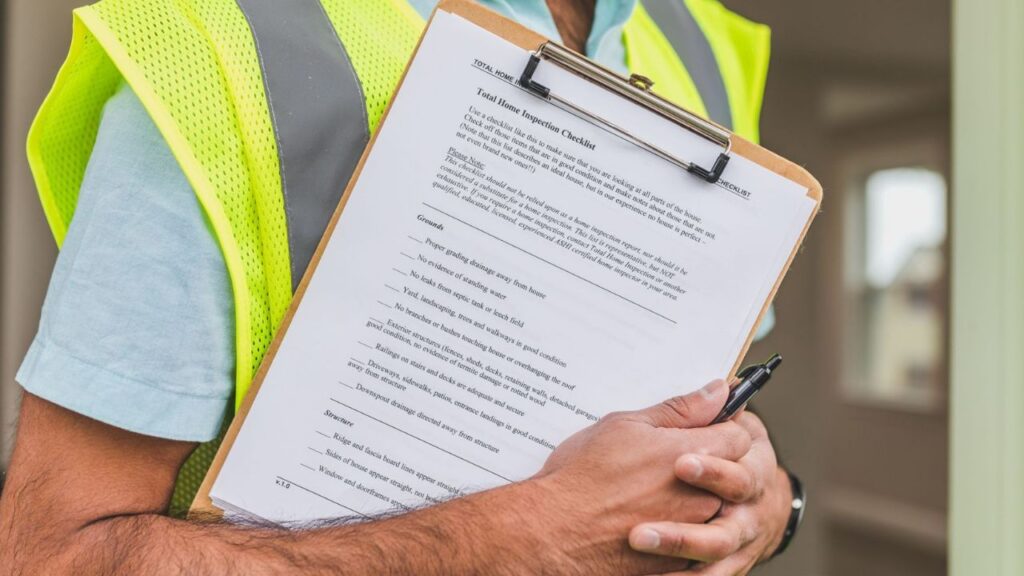
A warm building during a North Georgia summer is often the first clear sign that an HVAC system is losing performance under load. By the time indoor comfort drops or airflow becomes uneven, the system is rarely failing suddenly. It has usually been degrading for weeks under steady strain.
An HVAC maintenance checklist is usually searched only after these warning signs appear. In North Georgia, this delay is common. Systems run through long cooling seasons, high humidity, and frequent storm-related power fluctuations.
These conditions do not cause sudden breakdowns. They create slow wear in airflow, coils, and electrical parts until efficiency drops at the worst time.
In most service calls across the region, the problem is not a broken system. It is a system that was not maintained on time.
Why HVAC Systems in North Georgia Break Down Faster Than Expected
HVAC systems in this region run longer and harder than most homeowners and facility managers realize. Cooling demand is not occasional. It is sustained across months with very few recovery cycles.
Humidity is the key stress factor. It increases run time, slows cooling response, and forces components to work harder just to maintain basic indoor comfort. Over time, this creates a chain reaction inside the system.
Technicians in North Georgia commonly see the same progression:
- Airflow starts weakening across certain rooms or zones
- Evaporator coils accumulate moisture and dust faster than expected
- Electrical components begin running hotter under load
- Refrigerant pressure becomes inconsistent due to hidden leaks or wear
Most systems still “run” during this stage. That is what makes the problem easy to ignore. Failure usually arrives only when demand spikes, not when the damage begins.
10 Essential Tasks to Prevent Costly HVAC Breakdowns
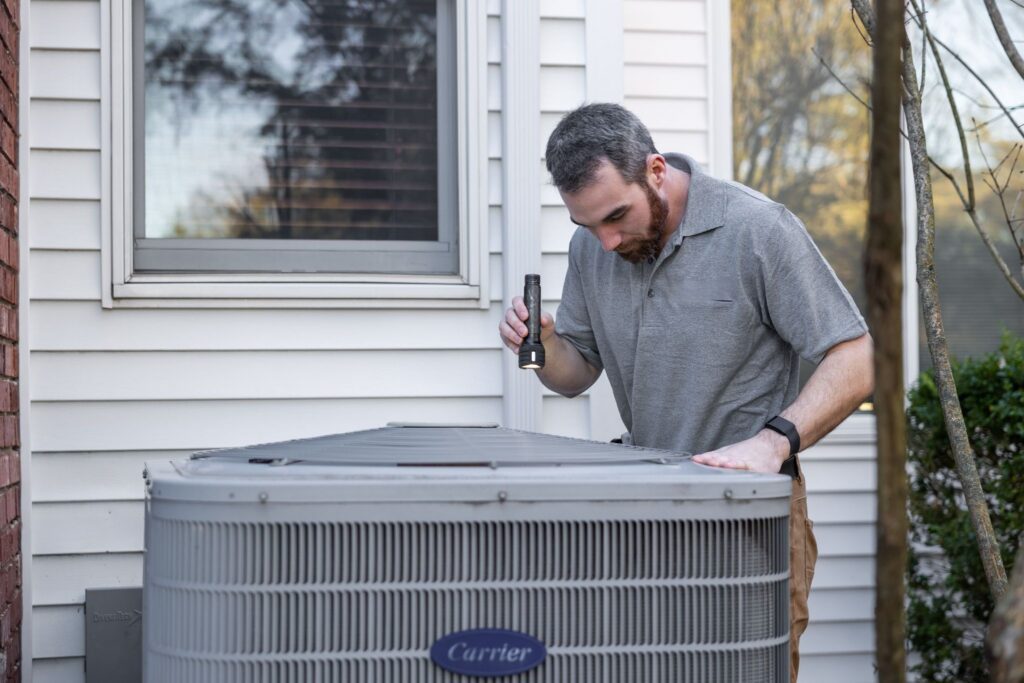
A real HVAC maintenance checklist reflects field conditions, not theory. These are the exact inspection points technicians rely on to prevent emergency breakdowns across North Georgia residential and commercial systems.
1. Replace Air Filters Before Airflow Restriction Begins
Air filters directly control system efficiency. Once clogged, they restrict airflow, increase blower motor strain, and reduce cooling output across the entire building. In North Georgia summers, filters often need inspection every 30–45 days due to heavy seasonal load.
What gets missed: A dirty filter doesn’t just reduce airflow; it increases internal system temperature and accelerates coil icing risk.
2. Verify Thermostat Accuracy and System Response
Not every cooling issue starts inside the HVAC unit. Thermostats can drift out of calibration or operate on incorrect settings, causing unnecessary system cycling or uneven cooling performance.
A common technician check is simple: Is the system responding to the correct signal, or reacting to incorrect input?
3. Inspect Evaporator Coil Condition for Early Efficiency Loss
Evaporator coils handle heat exchange inside the system, but they also collect moisture and airborne particles. In humid North Georgia conditions, buildup happens faster than expected.
When coils begin to clog:
- Cooling speed drops noticeably
- Airflow feels weak even when the system runs continuously
- Ice formation can begin during peak load periods
This is one of the most common causes behind “AC running but not cooling.”
4. Clean the Outdoor Condenser Unit to Maintain Heat Release
The condenser is responsible for releasing the heat removed from indoor air. When debris, pollen, or vegetation blocks airflow, heat cannot dissipate efficiently.
This leads to:
- Rising system pressure
- Compressor strain
- Gradual overheating during peak afternoons
In field inspections, outdoor units partially blocked by debris are a recurring issue in North Georgia homes and facilities.
5. Inspect Condensate Drain Lines Before Moisture Backup Occurs
Cooling systems continuously remove humidity from the air. That moisture must drain properly. When drain lines clog, water begins backing up into the system or the surrounding structure.
Common early warning signs include:
- Ceiling stains near HVAC zones
- Water pooling near indoor units
- Unexpected system shutdowns during operation
A slow drain is rarely urgent at first, but it becomes disruptive quickly in high-humidity climates.
6. Check Refrigerant Levels and Identify Leak Indicators
Refrigerants do not naturally deplete. If levels are low, there is almost always a leak in the system.
The impact is gradual but serious:
- cooling efficiency declines over time
- compressor workload increases
- Energy usage rises without output improvement
Ignoring refrigerant issues is one of the most common causes of full compressor failure.
7. Inspect Electrical Contactors and Control Components
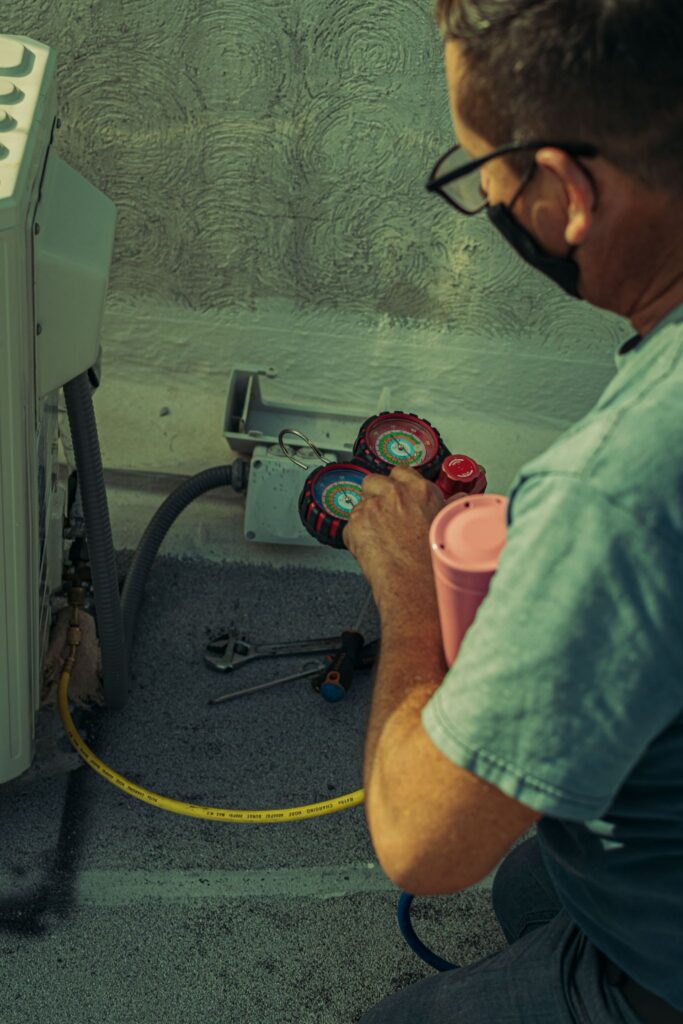
Contactors manage power flow to major HVAC components. In Georgia’s storm-prone and high-heat environment, electrical wear is common.
Failing contactors may cause:
- Intermittent system startup
- Buzzing or clicking during operation
- Short cycling without warning
These failures often appear suddenly but develop slowly over time.
8. Test Airflow Consistency Across Vents and Ductwork
Airflow imbalance is often mistaken for equipment failure. In reality, it is frequently caused by duct leakage, blockage, or pressure loss within the system.
Technicians typically verify this by comparing temperature differences between supply and return airflow to identify hidden inefficiencies.
9. Inspect Motors and Moving Components for Wear
Fans and motors operate continuously during cooling cycles. Without proper maintenance, friction increases heat buildup, which shortens component lifespan.
Motor wear rarely causes immediate breakdowns. It causes a performance decline that escalates quietly until failure occurs under load.
10. Run Full System Performance Testing Under Peak Conditions
A complete system evaluation reveals issues that individual checks cannot detect. This includes:
- Cooling cycle timing
- Pressure stability
- Noise and vibration patterns
- Recovery speed after load changes
Most early-stage system failures are only identified during full-cycle testing, not visual inspection.
HVAC Maintenance Checklist Template for North Georgia Facilities
In commercial environments, HVAC systems rarely get extended downtime. That makes a structured HVAC maintenance checklist template essential for planning inspections, tracking system performance, and reducing unexpected disruptions throughout the year.
| Timing | Maintenance Focus | Operational Impact |
| Early Spring | Full system inspection and coil cleaning | Prepares the system for sustained cooling demand |
| Monthly Peak Season | Filter changes and zone performance checks | Maintains airflow consistency under continuous use |
| Mid-Summer | Load testing and electrical evaluation | Reduces mid-season failure risk |
| Late Summer | Drain system and coil condition review | Prevents moisture-related efficiency loss |
| Early Fall | Full efficiency audit and wear analysis | Stabilizes long-term system performance |
In commercial service environments, this structure is used to reduce downtime risk during peak operational periods when HVAC failure directly impacts productivity and cost.
Why Professional HVAC Maintenance Improves System Reliability
Most HVAC issues do not begin as failures. They begin as a performance drift that is not visible during routine checks. Small airflow changes, early coil buildup, and subtle electrical wear often go unnoticed until system output drops under peak demand.
This is where professional diagnosis becomes critical. Trained technicians identify patterns that are not visible during basic inspection, especially in systems running continuous seasonal loads.
Star Services Heating & Air Conditioning is a locally owned North Georgia HVAC company with over 24 years of commercial system experience. Backed by licensed, EPA-certified technicians and industry accreditations, our focus is on safe, compliant, and long-term HVAC reliability across both residential and commercial systems.
Service coverage includes commercial HVAC repair, system installation, and preventive maintenance across North Georgia. The goal is to identify performance issues early, reduce costly downtime, and maintain reliable operation during periods of peak cooling demand.
Before the Next North Georgia Heat Cycle Begins
HVAC systems rarely fail without warning. The early signs usually appear as small performance changes that are easy to overlook during daily operation, but become costly problems under sustained demand.
An HVAC maintenance checklist helps identify those warning signs before they develop into unexpected breakdowns. For facility managers and property owners, using an HVAC maintenance checklist template also creates a consistent maintenance schedule that reduces downtime, improves efficiency, and extends equipment life.
In North Georgia’s long cooling season, system reliability is often determined months before a breakdown occurs. The question is not whether maintenance will be needed, but whether the warning signs will be caught early enough to prevent the disruption.